What Is India’s New Rs. 2,000 Crore Drone Scheme, and Who Benefits From It?
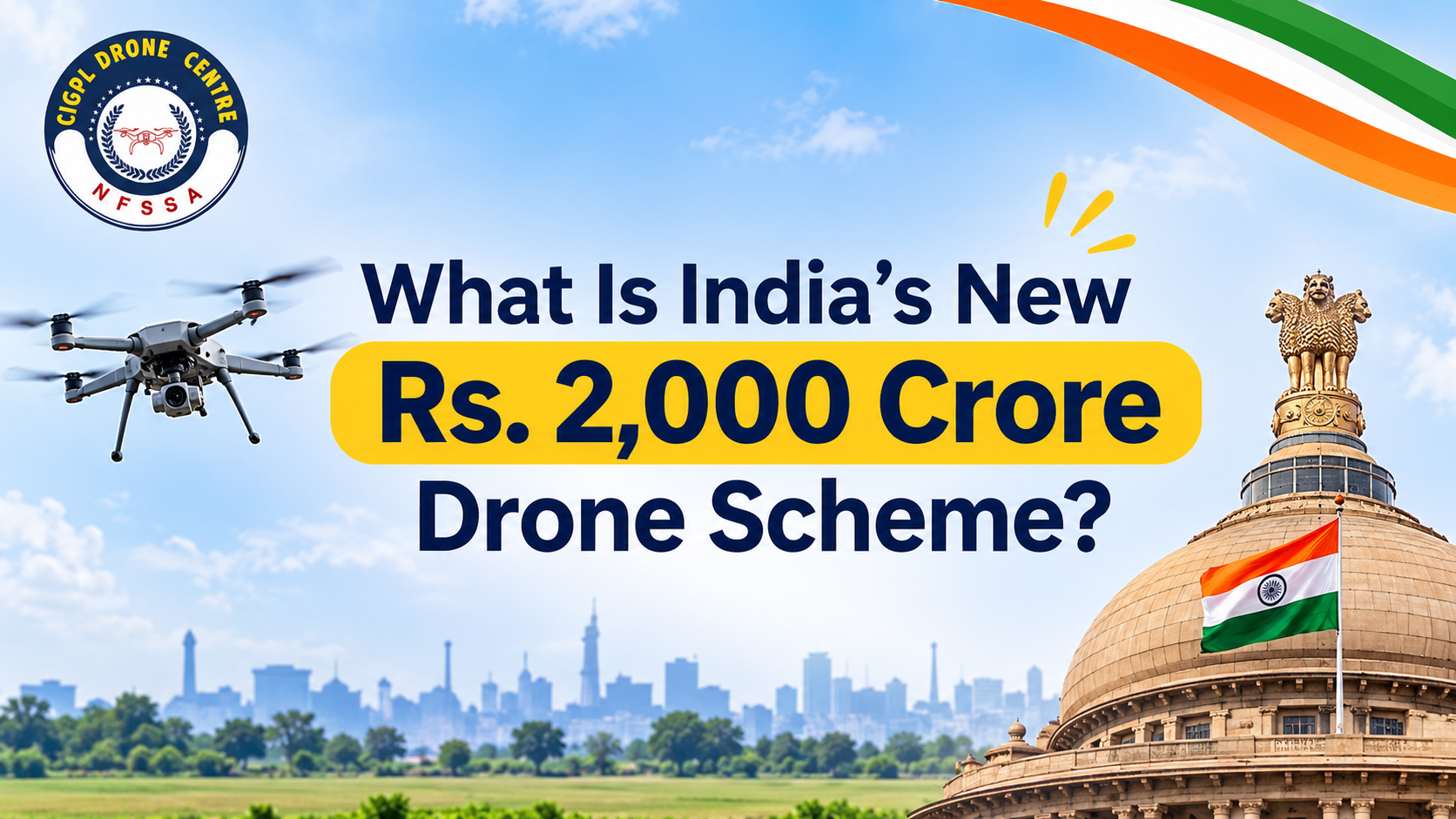
Ask anyone in India’s drone industry what they are waiting for, and “the new scheme” comes up within a minute.
The number most people quote is Rs. 2,000 crore. It is more than 16 times the size of India’s first drone incentive scheme, and it has been talked about since 2025. But talk and a notified scheme are two different things.
This post separates what the government has officially done from what is still in the pipeline, and explains who stands to gain, including the pilots who will fly the drones these factories build.
Quick Summary
- India’s first drone incentive, the PLI scheme, was notified on 30 September 2021 with Rs. 120 crore over three financial years. It has now ended, with about Rs. 98.32 crore paid out.
- A larger follow-up scheme, widely reported at around Rs. 2,000 crore, has been under discussion since 2025. The government has said it is working on a new incentive scheme, but its final size and rules have not been officially notified yet.
- The focus is shifting from assembling drones to making components such as flight controllers, motors and sensors in India.
- More Indian-made drones means more operators, more service companies and more demand for trained, certified pilots.
Where the New Scheme Actually Stands
Here is the honest picture as of November 2026.
What is confirmed. The first drone PLI scheme ran from FY 2021-22 to FY 2023-24 and has closed. In a written reply to the Lok Sabha in April 2025, the Ministry of Civil Aviation confirmed the scheme period had ended and that about Rs. 98.32 crore had been disbursed.
What the government has said. In August 2026, Union Civil Aviation Minister Kinjarapu Rammohan Naidu said the Ministry is working on a new financial incentive scheme to strengthen domestic manufacturing of drones and critical components.
What is not yet official. The Rs. 2,000 crore figure comes from media reports, not from a government notification. The Ministry’s replies to Parliament up to December 2025 describe only the 2021 PLI scheme. Until the Cabinet approves the new scheme and its guidelines are published, the exact amount, duration and eligibility rules are not final.
That matters if you are reading about this on social media. Treat any specific claim about payouts or deadlines with caution until it appears on PIB or the Ministry of Civil Aviation’s website.
What the First Scheme Did, and Where It Fell Short
To understand the new scheme, start with the old one.
| Feature | PLI Scheme for Drones (2021) |
|---|---|
| Notified | 30 September 2021 |
| Total outlay | Rs. 120 crore over three financial years |
| Incentive | 20% of value addition |
| Minimum value addition | 40% of net sales |
| Beneficiaries | 23 companies: 12 drone makers and 11 component makers |
| Amount disbursed | About Rs. 98.32 crore |
The scheme did its job as a starting point. Alongside it, the government banned the import of foreign drones from 9 February 2022 while keeping component imports free, which pushed companies to build drones in India.
But building a drone in India is not the same as making its parts here. In the same April 2025 reply to Parliament, the Ministry said that, according to manufacturers’ own data, about 39% of flight controllers used in small-category drones registered with DGCA come from China-based suppliers.
That is the gap the next scheme is meant to close. The Minister’s own words in August 2026 pointed at “critical components”, not just finished drones.
Why the Government Is Pushing Harder Now
Three things have changed since 2021.
The market is real now. By February 2026, India had 38,575 registered drones, 39,890 remote pilot certificates issued and 244 DGCA-approved training organisations. By December 2025, DGCA had granted 142 type certificates to 95 Indian manufacturers covering agriculture, mapping, inspection, surveillance and logistics drones.
Costs have come down. GST on drones was cut to a uniform 5% in September 2025, replacing the earlier 18% and 28% rates. That makes Indian-made drones easier to buy for farmers, startups and service companies.
Security needs are growing. The Union Budget 2026-27 gave the Ministry of Defence a record Rs. 7.85 lakh crore, with capital spending that covers unmanned aerial vehicles and drones. Defence buyers want drones whose parts are made in India, not imported.
Who Benefits When the Scheme Arrives
A manufacturing incentive is paid to companies, but its effects travel much further.
Drone and component makers. They are the direct beneficiaries. Under the 2021 scheme, MSMEs and startups qualified with annual drone sales of Rs. 2 crore, or Rs. 50 lakh for component makers. A larger scheme should bring more companies over that line.
Drone service companies. Cheaper, locally made drones lower the cost of starting a spraying, survey, inspection or delivery business.
Farmers, government departments and industry. More supply and lower prices mean wider use in agriculture, land mapping, infrastructure and security.
Drone pilots. This is the part most people miss. Every drone a factory sells needs a certified pilot to fly it commercially. India already has nearly 40,000 certified remote pilots, and every new operator, service company and government project adds demand for more. That is why UAV training India is growing alongside manufacturing, not separately from it.
For pilots, the opportunity is not just flying. Manufacturers need test pilots, demo pilots and trainers for their customers. Service companies need pilots who can handle mapping, inspection and surveillance payloads, not just basic flying.
If you are planning a career here, a drone pilot course from a drone training institute in India that offers proper DGCA drone training is the entry ticket. A specialised drone certification course in mapping or surveillance on top of that makes you useful to the companies this scheme will help grow.
FAQs
Has the Rs. 2,000 crore drone scheme been officially launched?
Not yet. The government has said it is working on a new incentive scheme, but the Rs. 2,000 crore figure comes from media reports. Check PIB and the Ministry of Civil Aviation website for the official notification.
Is the old PLI scheme for drones still open?
No. It covered FY 2021-22 to FY 2023-24 and has ended. About Rs. 98.32 crore was disbursed under it.
Can individual drone pilots apply for this scheme?
No. Manufacturing incentives go to registered companies that make drones or components. Pilots benefit indirectly through more drones, more operators and more jobs.
Why is the focus on components?
Because many key parts are still imported. The Ministry told Parliament in 2025 that about 39% of flight controllers in small drones come from China-based suppliers.
Does a bigger drone industry mean more jobs for pilots?
Yes. Every commercial drone needs a certified pilot, and growing manufacturing feeds more service companies, government projects and training needs.
Summary
India’s first drone PLI scheme was small, at Rs. 120 crore, but it helped start a domestic industry. The next scheme, widely reported at around Rs. 2,000 crore, is meant to go deeper into components and is still awaiting official notification.
When it arrives, the benefits will not stop at factory gates. More Indian-made drones means more work for certified pilots across agriculture, mapping, inspection and security. Explore the Remote Pilot Certificate course at CIGPL and our drone training programmes to see how you can be ready for that demand.
Sources
- Lok Sabha Unstarred Question 4624: PLI for Drones (31 March 2022)
- PIB: Rs. 120 crore incentive under PLI scheme, 23 provisional beneficiaries (25 July 2022)
- Lok Sabha Unstarred Question 5448: PLI scheme for drone manufacturing (3 April 2025)
- Lok Sabha Unstarred Question 2994 (18 December 2025)
- PIB: India’s Drone Ecosystem, from policy to public service (February 2026)
- PIB: Defence in Union Budget 2026-27 (February 2026)