Drone Career Options for Defence Veterans and Ex-Agniveers in India
Quick Summary
- Military training in drone operation, SOP compliance, situational awareness, and field maintenance gives veterans and ex-Agniveers a significant head start in commercial drone careers.
- Military flight hours do not automatically convert to a DGCA Remote Pilot Certificate. Veterans must still complete the standard RPC course, but they typically clear it with exceptional ease.
- The Seva Nidhi corpus of approximately Rs. 11.71 lakhs available to ex-Agniveers can fully fund RPTO certification, commercial drone purchase, and the launch of a drone service business.
India is building its drone industry at the same time as it is releasing thousands of trained, disciplined, technically competent personnel from military service through the Agniveer scheme. These two things are not a coincidence. They are an opportunity.
The civilian drone market in India is projected to reach USD 1.43 billion by 2029. The defence drone segment alone is expected to reach USD 4.08 billion by 2030. The industry needs people. Veterans have the background. This article explains exactly how the transition works, what it costs, what you can earn, and who is already doing it successfully.
Skills You Already Have That Matter in This Industry
The DGCA framework for commercial drone pilots is built around compliance, safety, and operational discipline. If you served in the Indian Armed Forces, you might have already been trained for exactly this, even if the certification was called something different.
SOP compliance: Commercial drone operations under the Drone Rules 2021 require meticulous pre-flight airspace checks, No Permission No Takeoff (NPNT) protocol compliance, and post-flight battery and maintenance logging. Military personnel follow aviation and infantry SOPs without deviation. This institutional conditioning maps directly onto civilian regulatory requirements.
Situational awareness and tactical piloting: You trained to maintain spatial orientation, identify environmental hazards, and respond to rapid meteorological changes. This translates directly to managing Visual Line of Sight operations and complex Beyond Visual Line of Sight missions in civilian airspace, where you must constantly assess ground risks and airspace incursions.
Field maintenance: Establishments like the Golden Key Division’s Drone Repair and Training Facility train personnel in rapid maintenance, payload integration, and battery management. Commercial enterprises in agriculture, mining, and infrastructure inspection deploy in remote locations where external technical support is not available. Your ability to diagnose and fix hardware on-site is worth a significant salary premium.
Physical fitness: Enterprise drone pilots in agricultural and industrial roles work in extreme heat, carry heavy equipment across difficult terrain, and manage battery swaps over long operational shifts. The physical standards you maintained during service are directly relevant to these conditions.
In-service drone experience: The Indian Armed Forces use quadcopters for perimeter security, VTOL fixed-wing aircraft for border surveillance, thermal platforms for nocturnal operations, and nano-drones for close-quarter reconnaissance. Whatever you flew, you have real operational familiarity with unmanned systems that most civilian trainees simply do not have.
What Drone Training in the Armed Forces Actually Covers
Indian Army has mandated drone expertise as part of baseline Agniveer training, recognising that unmanned warfare will define future engagements. The training is structured and comprehensive.
| Training Phase | Target Audience | What Is Covered |
|---|---|---|
| Phase 1: Introduction and Handling | All Agniveers | Drone architecture, assembly, safety protocols, battery care and charging |
| Phase 2: Piloting Skills | All Agniveers | Manual and assisted flight, confined space navigation, day and night operations |
| Phase 3: Tactical Applications | All Agniveers | Reconnaissance patrol support, convoy security, target tracking, urban search |
| Phase 4: Field Evaluation | All Agniveers | Practical flight testing, scenario-based search and locate missions |
| Advanced Tactical Module | Section Commanders | Multi-drone coordination, counter-drone awareness, casualty evacuation overwatch |
This is genuinely substantive aviation training. Agniveers are exposed to mini UAVs like the ideaForge SWITCH, quadcopters for indoor close-range operations, and conceptually to swarm tactics and loitering munitions through competitive frameworks like the Mehar Baba Competition-3.
Do Military Credentials Convert to a DGCA RPC?
This is the most important thing to understand before planning your transition.
Military drone flight hours do not automatically convert into a DGCA Remote Pilot Certificate. Military drones operated under the Ministry of Defence are fully exempt from civil aviation registration. Because military operations are not logged within the Digital Sky Platform, the DGCA does not recognise tactical flight hours for civilian certification purposes.
To operate commercially, every defence veteran and ex-Agniveer must obtain a Remote Pilot Certificate by completing the standard course at a DGCA-approved RPTO.
This may feel redundant for someone who has logged hundreds of hours on military platforms. But in practice, veterans clear the RPTO course quickly and easily. They already meet every eligibility requirement: age above 18, minimum Class 10 education, and basic medical fitness. They have strong foundational knowledge of aerodynamics, weather, and emergency procedures. The certification process becomes a formality that confers the legal credential needed to work commercially.
The hardware also needs to be civilian-compliant. Commercial drones must have a DGCA Type Certificate and a Unique Identification Number registered on the Digital Sky Platform. Veterans familiar with military procurement understand why these compliance layers exist, even as they adapt to the specific workflows of the eGCA and Digital Sky portals.
Career Paths That Match Your Background
Drone Pilot Instructor at an RPTO
With over 244 approved RPTOs across India and demand for certified pilots growing rapidly, there is an acute shortage of qualified instructors. Ex-Air Force UAV operators and Army JCOs or NCOs with drone experience are highly sought after because of their depth in aviation meteorology, aerodynamics, and the kind of safety-first mindset that makes for a good instructor.
Becoming a DGCA-certified instructor requires completing a Train the Trainer (TTT) programme and logging a minimum of 20 hours of specific flight experience. Master Instructors, who have trained at least 100 pilot candidates, earn Rs. 80,000 to Rs. 1,20,000 per month. This is one of the most stable, well-compensated civilian drone roles available.
Agricultural Drone Operations
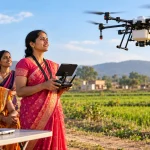
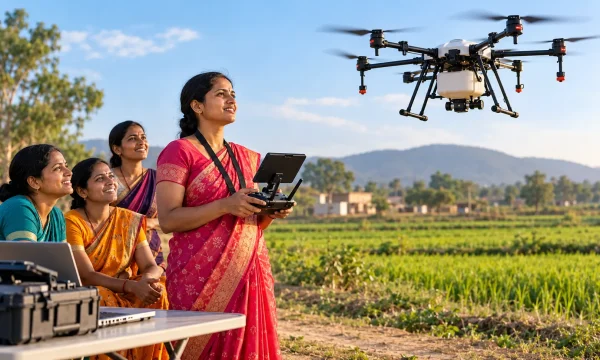
The government’s Kisan Drone initiative and related agricultural schemes have created massive demand for operators of Medium category spraying drones carrying 10 to 40 litre liquid payloads. The work requires managing hazardous chemicals, operating in high-temperature rural environments, and handling heavy equipment through long shifts.
The physical endurance and methodical grid-flying capabilities of ex-Agniveers make them well-suited for fleet operations in this sector. Experienced agricultural fleet managers earn Rs. 60,000 to Rs. 80,000 per month.
Surveillance, Security, and Disaster Management
Your tactical background in perimeter security, aerial reconnaissance, and real-time situational assessment translates directly into private industrial security, law enforcement support, and disaster relief operations.
State police forces, CAPFs, and private security firms increasingly rely on drone intelligence for crowd monitoring, border management, and emergency response. Veterans who understand how to interpret drone feeds, identify anomalies, and coordinate with ground teams are far more effective than pilots without that tactical training.
Mapping, Surveying, and Infrastructure Inspection
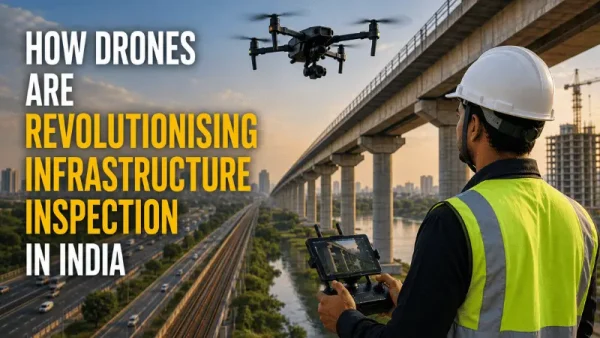
Large-scale national programmes like SVAMITVA and NHAI highway monitoring require precise topographical data collection. Veterans with backgrounds in military engineering, artillery, or signals are well-positioned to manage LiDAR data collection and photogrammetry, particularly for government contracts that require both technical accuracy and security clearance.
Defence Contractors and Aerospace Startups
Companies developing loitering munitions, swarm technologies, and autonomous logistics platforms actively hire veterans as test pilots, project managers, and system integrators. Your understanding of military procurement cycles, end-user operational requirements, and standard operating procedures is something civilian engineers cannot replicate.
Companies like ideaForge (which supplies the SWITCH UAV to the armed forces) and Garuda Aerospace recruit veterans for flight testing, payload integration, and liaison roles. IG Defence, developing Shahed-class autonomous strike systems for international export, specifically values military operators who understand contested environments.
Government Support for Your Transition
Directorate General Resettlement (DGR) Drone Courses
The DGR has specifically expanded its drone curriculum for transitioning personnel. For JCOs and Other Ranks, the Ministry of Defence covers 100 percent of course fees. Commissioned officers receive a 60 percent subsidy.
| Institute | Course | Duration | Vacancies | Fee |
|---|---|---|---|---|
| IIT Ropar | Certificate Course on Drone Training | 12 weeks | 40 | Rs. 1,00,000 |
| IIT Guwahati | Certificate Course on Drone Technology | 14 weeks | 30 | Rs. 1,00,000 |
| NSTI Hyderabad | Drone Technician and Pilot Licence | 12 weeks | 30 | Rs. 68,800 |
Agniveer-Specific Support Packages
Seva Nidhi: A tax-free financial corpus of approximately Rs. 11.71 lakhs, generated through a 30 percent monthly salary contribution matched by the government throughout your service. This can fully fund RPTO certification (Rs. 50,000 to 1,00,000), purchase of a commercial Small category drone (Rs. 1.5 to 3 lakhs), and provide working capital to launch a drone service business.
Agniveer Skill Certificate: A formal competency document mapping your military skills to civilian National Occupational Standards. The Directorate General of Training has signed a Flexi-MoU to award National Trade Certificates to Agniveers based on their service record. Drone OEMs and service providers treat this as verifiable proof of technical discipline and hardware experience.
Educational equivalency: If you joined with a Class 10 qualification, you receive a Class 12 equivalent certificate upon completing your four-year tenure. This exceeds the DGCA’s minimum educational requirement for RPC eligibility.
Priority recruitment: Ex-Agniveers receive priority placement in CAPFs, Assam Rifles, and state police forces, all of which are expanding their internal drone surveillance operations.
What You Can Earn Compared to Typical Post-Service Jobs
| Category | Weight | NPNT Status |
|---|---|---|
| Nano | Up to 250g | Exempt in Green Zones below 50 feet. No RPC, UIN, or insurance required for recreational use. |
| Micro | 250g to 2kg | Limited application. UIN required. Non-commercial use in Green Zones uses a simpler notification process rather than full NPNT. Commercial use triggers full requirements. |
| Small | 2kg to 25kg | Strictly enforced. Full NPNT hardware and firmware compliance mandatory. RPC and insurance required. |
| Medium | 25kg to 150kg | Strictly enforced. Same as Small. Used in heavy agriculture and logistics. |
| Large | Above 150kg | Strictly enforced, plus additional clearances under the Aircraft Rules. |
The salary premium for veterans in commercial drone roles comes from a specific dynamic: operating heavy agricultural drones or BVLOS logistics missions carries significant regulatory and financial liability. Employers pay more for pilots who will not cut corners.
Skills to Add After Your RPC
Your military background gives you the foundation. Here is what to add to reach the highest-paying roles.
Medium RPC: If you start with a Small category RPC, upgrading to Medium certification opens access to heavy-lift agricultural operations and logistics roles. This upgrade takes 2 to 3 days and costs around Rs. 30,000.
Train the Trainer (TTT) certification: Mandatory for becoming an RPTO instructor. This unlocks the Rs. 70,000 to 1,20,000 monthly instructor salary bracket.
Photogrammetry and GIS software: Pix4D, DroneDeploy, AutoCAD. Converting raw aerial data into usable maps and reports is where commercial clients pay the most. This skill differentiates a Rs. 40,000 per month operator from a Rs. 1,00,000 per month specialist.
LiDAR processing: Required in mining, infrastructure inspection, and forestry. Your signals or engineering background from service gives you a head start in understanding the underlying principles.
Cybersecurity basics: As drones capture sensitive spatial data, particularly in government contracting, certifications in secure data management are increasingly valued.
Challenges to Expect During the Transition
Regulatory adjustment: Military airspace operates under Ministry of Defence exemptions with significant tactical freedom in designated areas. Civilian airspace is tightly controlled by the DGCA. You will need to adapt to filing formal flight plans on the Digital Sky Platform, obtaining explicit clearances for Yellow Zones, and operating under NPNT software locks. The cultural shift from mission accomplishment to strict pre-flight regulatory compliance takes conscious recalibration.
Starting fresh on paper: Flight hours from classified tactical operations cannot be formally documented with the DGCA. Despite having more real flying experience than most civilian candidates, you will complete the standard RPTO course and receive the same certificate as a first-time student. This is a bureaucratic reality, not a reflection of your competence.
Hardware adaptation: Military platforms often include fixed-wing or specialised VTOL systems with encrypted telemetry and stealth characteristics. The commercial sector predominantly uses multirotor COTS hardware like the DJI Enterprise series. The flight dynamics, open-source flight controllers, and commercial payload sensors require specific familiarisation time.
The Outlook Between 2026 and 2030
The timing is genuinely favourable. The first cohorts of Agniveers are completing their four-year tenures and entering the civilian market right as several commercial drone sectors are moving from trial phases to full commercial deployment.
BVLOS logistics: Medical supply delivery and e-commerce logistics via drone require pilots who can handle intense concentration over extended missions and respond rapidly to emergencies. Military training develops exactly this capacity.
Agricultural automation: The mass deployment of Kisan Drones continues to scale. Operating Medium category drones in austere rural conditions with heavy chemical payloads requires the physical and procedural discipline that military service develops.
Counter-UAS security: As civilian drone use expands, rogue drone threats at airports, critical infrastructure, and VIP events will grow. Veterans trained in counter-drone measures, jamming, and spoofing are uniquely positioned for civil aviation security roles that very few civilian operators can fill.
FAQs
No. Military drone operations are exempt from civil registration, so hours logged in service are not recognised by the DGCA for civilian certification. However, your military background means you will find the RPTO course straightforward and will likely perform at the top of your batch.
Yes. The Rs. 11.71 lakh tax-free corpus is entirely yours to use. It comfortably covers RPTO training fees, drone purchase, insurance, and initial business operating costs.
Yes. The DGR funds 12 to 14-week drone technology courses at IIT Ropar, IIT Guwahati, and NSTI Hyderabad for transitioning JCOs and Other Ranks at full government expense.
Yes. The DGCA requires a minimum Class 10 pass, which you already hold. And upon completing four years of service, you receive a Class 12 equivalent certificate, which exceeds the DGCA requirement.
Security, surveillance, and disaster management roles are the most immediate fit. From there, agricultural fleet management and RPTO instruction offer the highest salary growth potential.
No. Operating Small category commercial drones requires a basic medical fitness certificate from any registered MBBS doctor. The strict Class 1 or Class 2 medicals are only required for commercial manned aviation.
Yes. The certificate maps your military competencies to civilian National Occupational Standards and is treated by drone OEMs and service providers as verifiable proof of technical capability and operational discipline.
Summary
Defence veterans and ex-Agniveers are among the best-positioned candidates in India’s growing drone industry. The discipline, technical training, physical endurance, and tactical situational awareness from military service directly match what commercial drone operations require.
The transition requires one practical step: completing the civilian RPC course at a DGCA-approved institute. Military credentials do not bypass this, but they make it straightforward. After certification, the career options span flight instruction, agricultural operations, surveillance and security, infrastructure inspection, and defence contractor roles, with salaries well above typical post-service civilian employment.
The DGR, the Seva Nidhi corpus, and the Agniveer Skill Certificate framework all exist to support this transition. The timing, with the first Agniveer cohorts exiting service as the commercial drone industry scales, is genuinely favourable.
If you are ready to take the first step toward civilian certification, our Remote Pilot Certificate course at CIGPL is run by a DGCA-approved RPTO designed to efficiently build on the foundation you already have. Take a look at our full training programme to see which pathway fits your background and goals.
Your service gave you the foundation. This certification gives you the civilian credential to build on it.